

HOW COULD EXTREME HEAT AFFECT THE WORLD CUP ORGANIZATION
10/05/2026
HOW COULD EXTREME HEAT AFFECT THE WORLD CUP ORGANIZATION
HOW COULD EXTREME HEAT AFFECT THE WORLD CUP ORGANIZATION
With just a month to go before the start of the world's biggest football tournament, attention is turning not only to the teams and venues, but also to the weather.
The United States, Canada, and Mexico, where the tournament will be held, experience problems during the summer months such as heatwaves, thunderstorms, and even poor air quality due to wildfires.
Humidity can also be a significant factor in potential disruptions due to weather conditions.
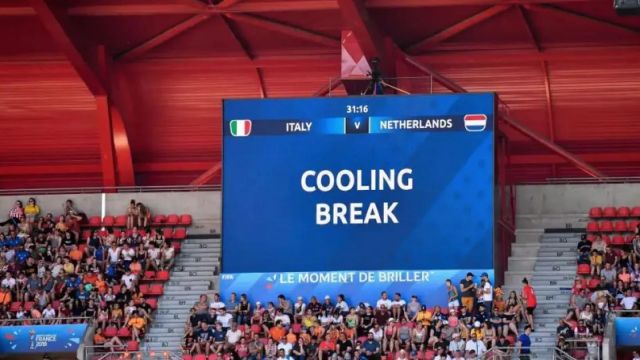
FIFA has acknowledged that hot weather can be a problem and, as part of its "commitment to player welfare," has implemented mandatory three-minute breaks in both halves of every match in the tournament.
During last year's FIFA Club World Cup, six matches, including Chelsea vs. Benfica, were interrupted due to extreme heat and storms, resulting in a two-hour delay.
This incident led Chelsea manager Enzo Maresca to say that the US "is probably not the right place to host this tournament."
How hot can it get? Most host cities are accustomed to high summer temperatures.
In the southern United States and northern Mexico, average daytime temperatures are typically around 30°C and can reach up to 40°C during hotter periods.
When humidity is added to the equation, everything starts to feel even hotter, as it becomes even harder for the body to cool itself effectively.
There are two heat indices you'll hear about frequently this summer.
One is "feels like temperature," which describes how your body feels the heat rather than what the thermometer shows.
For example, in Miami, a typical summer temperature of 32°C often feels like 43°C.
There's also the Wet Sphere Temperature (WBGT), which assesses the physical heat stress on the body. A WBGT of around 28°C is considered the threshold at which heat stress becomes a significant concern for elite athletes.
A 2025 study published in the International Journal of Biometeorology found that "14 out of 16 host cities will exceed 28°C WBGT on a summer afternoon."
Six host cities (Miami, Houston, Dallas, Monterrey, Kansas City, and Atlanta) have WBGTs that could reach at least 32°C in the afternoon. This is considered extreme heat stress, where the body struggles to keep cool.
To mitigate the risks, matches are often scheduled outside the hottest hours of the day, with many kick-off times in the afternoon or late evening. For example, Scotland's Group C match against Brazil in Miami will kick off at 6 pm.
Some venues, including stadiums in Houston and Dallas, also feature retractable roofs and air conditioning systems to alleviate the conditions.
Summer heatwaves are also common in North America and Mexico. Temperatures here can rise 10°C or more above average, making conditions much more challenging for both players and fans.
For example, in New York, where this year's World Cup final will be played on July 19th at 3:00 PM Eastern Time, a typical heatwave can cause temperatures to reach the mid-30s, leading to extreme heat stress.
HOW COULD EXTREME HEAT AFFECT THE WORLD CUP ORGANIZATION