

Biologists captured in 3D how T cells devour cancer cells
01/05/2026
Biologists captured in 3D how T cells devour cancer cells
Biologists captured in 3D how T cells devour cancer cells
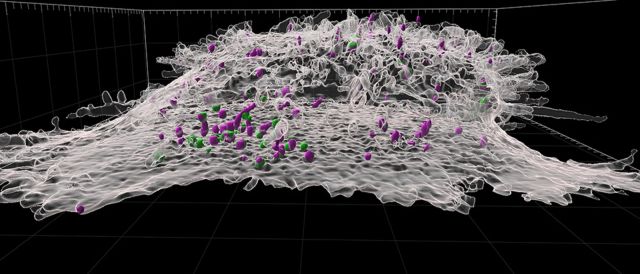
For the first time, biologists have visualized in 3D the process of cancer cell destruction by cytotoxic T lymphocytes. Using cryoexpansion microscopy, they were able to examine in detail the nanostructures of the immune synapse in its natural state without damage.
Researchers from the University of Geneva and the University Hospital of Lausanne (Switzerland) have visualized in 3D the mechanisms by which cytotoxic T lymphocytes destroy cancer cells. The results of the study were published in the journal Cell Reports.
Cytotoxic T lymphocytes destroy infected or cancerous cells in the body. To do this, they form a specialized exchange site known as an immune synapse, through which toxic molecules are released without damaging adjacent healthy tissue.
Studying these processes at the nanometer level was previously hampered by sample preparation methods that disrupted fragile cellular structures. To overcome these limitations, the research team employed cryoexpansion microscopy, which involves ultra-fast freezing of cells to a glassy state and subsequent physical expansion of the sample using a hydrogel.
Visualization revealed that at the point of contact between the lymphocyte and its target, the cell membrane forms a dome-shaped structure. This shape is linked to the internal cellular scaffold and provides a secure anchor for the targeted delivery of destructive molecules into the target's tissue.
The specialists were also able to examine in high detail the cytotoxic granules directly responsible for target cell death. It was discovered that their architecture can vary, including one or more nuclei, where the active destructive substances are concentrated.
The approach was successfully tested on human tumor tissue samples, allowing for the direct observation of lymphocyte infiltration in a clinical context. The data obtained provide a foundation for further study of the immune system and the refinement of immuno-oncology strategies.
Science Mail previously reported that scientists have developed a new vaccine against the human immunodeficiency virus (HIV), which primes the immune system to attack the vulnerable portion of any strain of the virus.
Biologists captured in 3D how T cells devour cancer cells